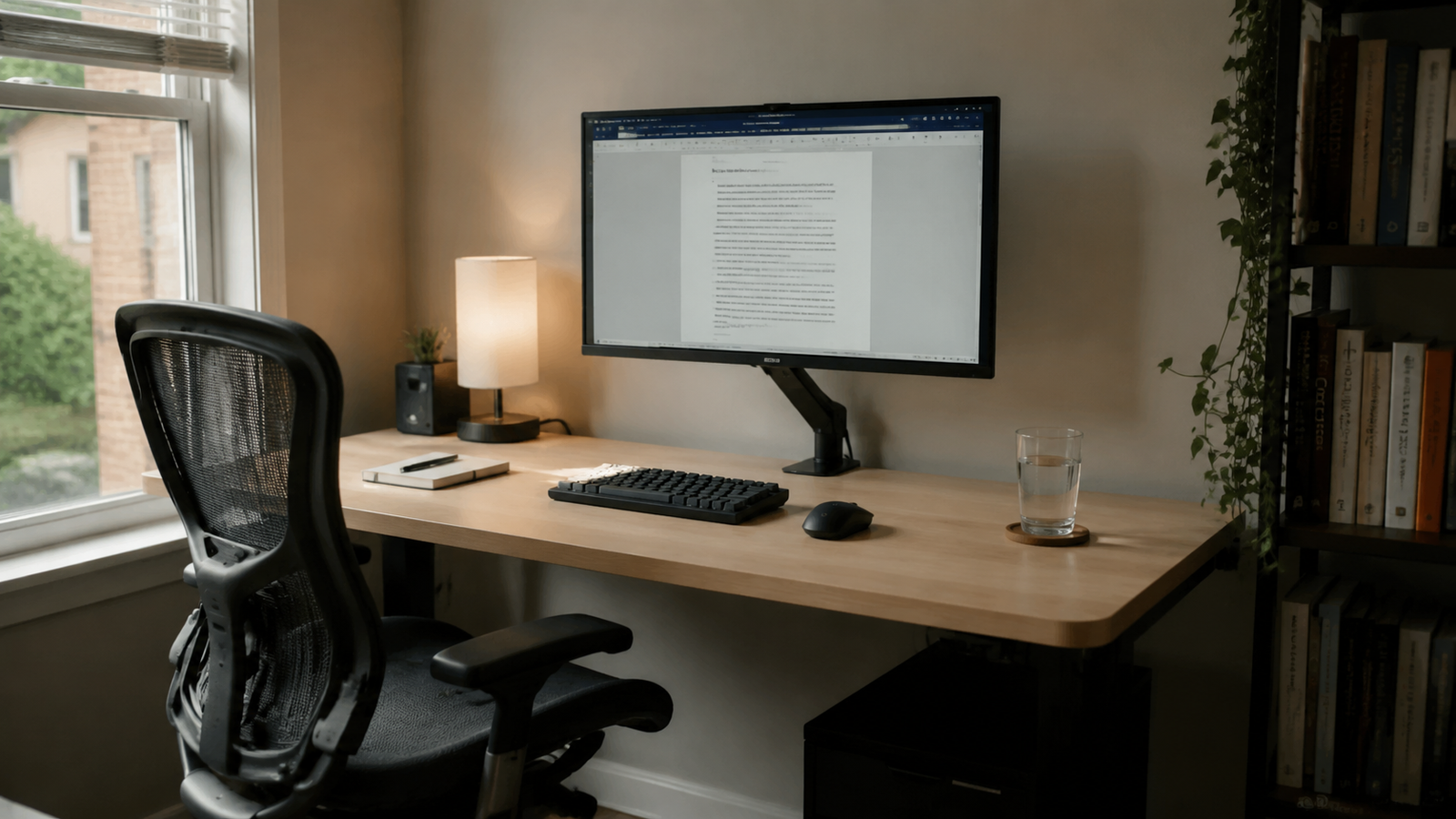
Small Desk Setup
How to Build a Small Workspace That Doesn't Feel Small
A small workspace doesn't have to feel cramped. With better workspace planning and a few intentional decisions, even the most compact setup can feel surprisingly spacious.
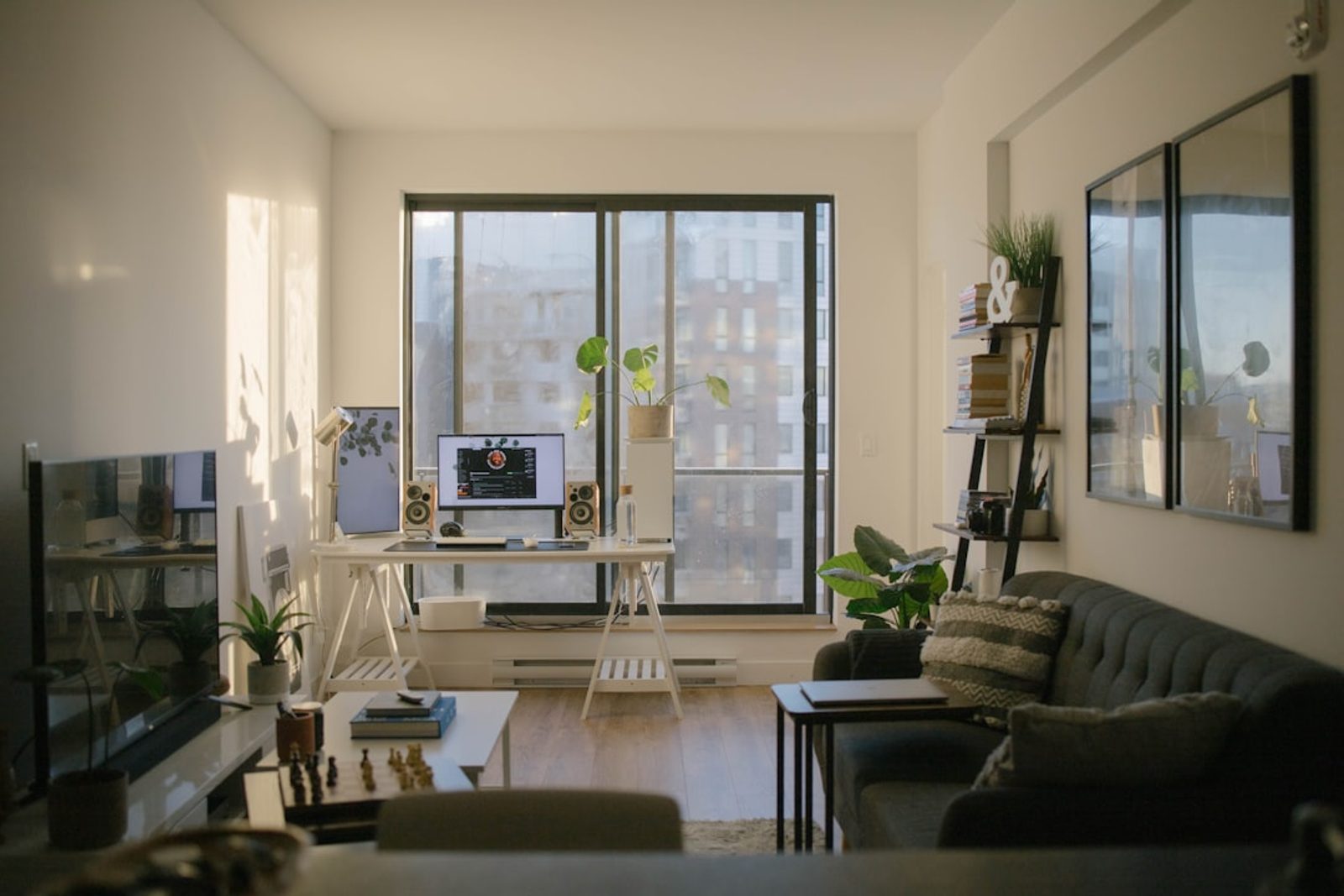
When I moved into a smaller apartment, I assumed my workspace would become a compromise.
Less room meant a smaller desk. A smaller desk meant less comfort. Or at least that's what I believed.
For weeks, I searched for clever storage hacks and compact furniture solutions, convinced that the secret was finding ways to squeeze more into the room.
What surprised me was that the best improvement came from doing the opposite.
Instead of figuring out how to fit more things into the workspace, I started figuring out how to fit fewer.
That's when the room stopped feeling small.
The Biggest Mistake Happens Before You Buy Anything
Most workspace planning starts with furniture.
People shop for desks, shelves, monitor arms, and storage before they've decided how the space will actually be used.
A better question is this:
What does your workday look like?
A writer, designer, developer, and student can all work from the same room while needing completely different layouts.
Good workspace planning starts with workflow, not furniture.

Most Small Workspaces Feel Small Because They're Too Busy
A surprising number of compact workspaces contain more furniture than larger rooms.
Extra shelves. Storage carts. Desktop organizers. Accessory stands. Decorative items.
Every item seems useful by itself.
Together, they create visual noise.
The room starts feeling crowded long before it actually runs out of space.
One lesson I've learned from studying hundreds of small office setups is that simplicity scales better than storage.
The more objects competing for attention, the smaller the room tends to feel.
The Desk Doesn't Need to Be Bigger
Many people assume a small workspace problem is actually a desk problem.
If the workspace feels cramped, buy a larger desk.
Unfortunately, clutter expands to fit available space.
I've seen large desks with less usable room than compact desks.
The difference is almost always layout.
A thoughtful compact workspace protects the areas where work actually happens.
- A clear keyboard zone
- Open notebook space
- Comfortable monitor placement
- Easy access to daily tools
- Minimal visual distractions
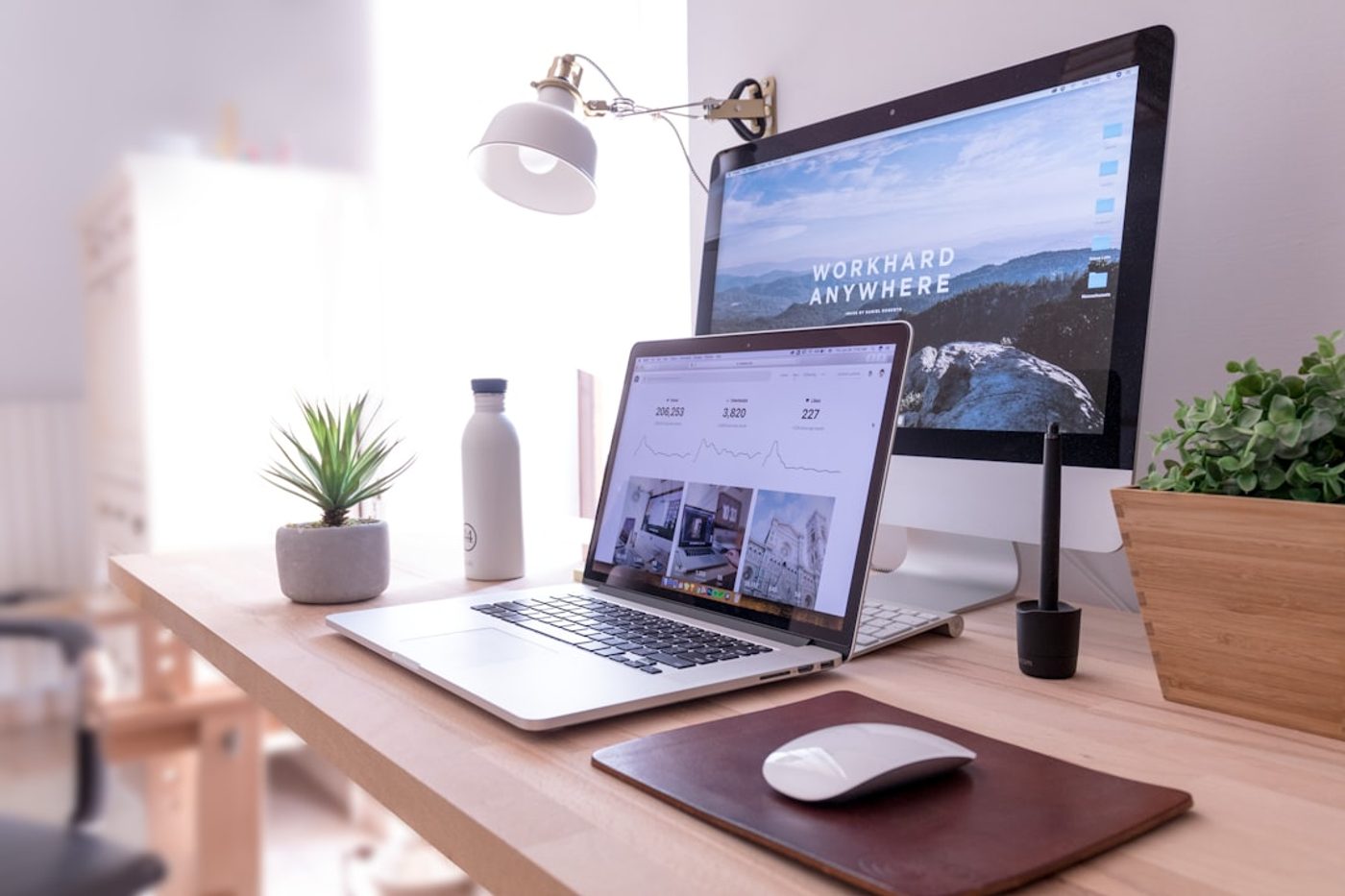
The DeskCurated Principle: Protect Open Space
Most people see empty desk space and immediately think something should go there.
We believe the opposite.
Open space is one of the most valuable tools in a workspace.
It's where unexpected tasks happen.
It's where notebooks open during meetings.
It's where projects spread out when they become complicated.
Protecting open space is often more important than adding storage.
The best small workspace ideas usually involve removing things, not adding them.
Use Vertical Space Without Creating Visual Clutter
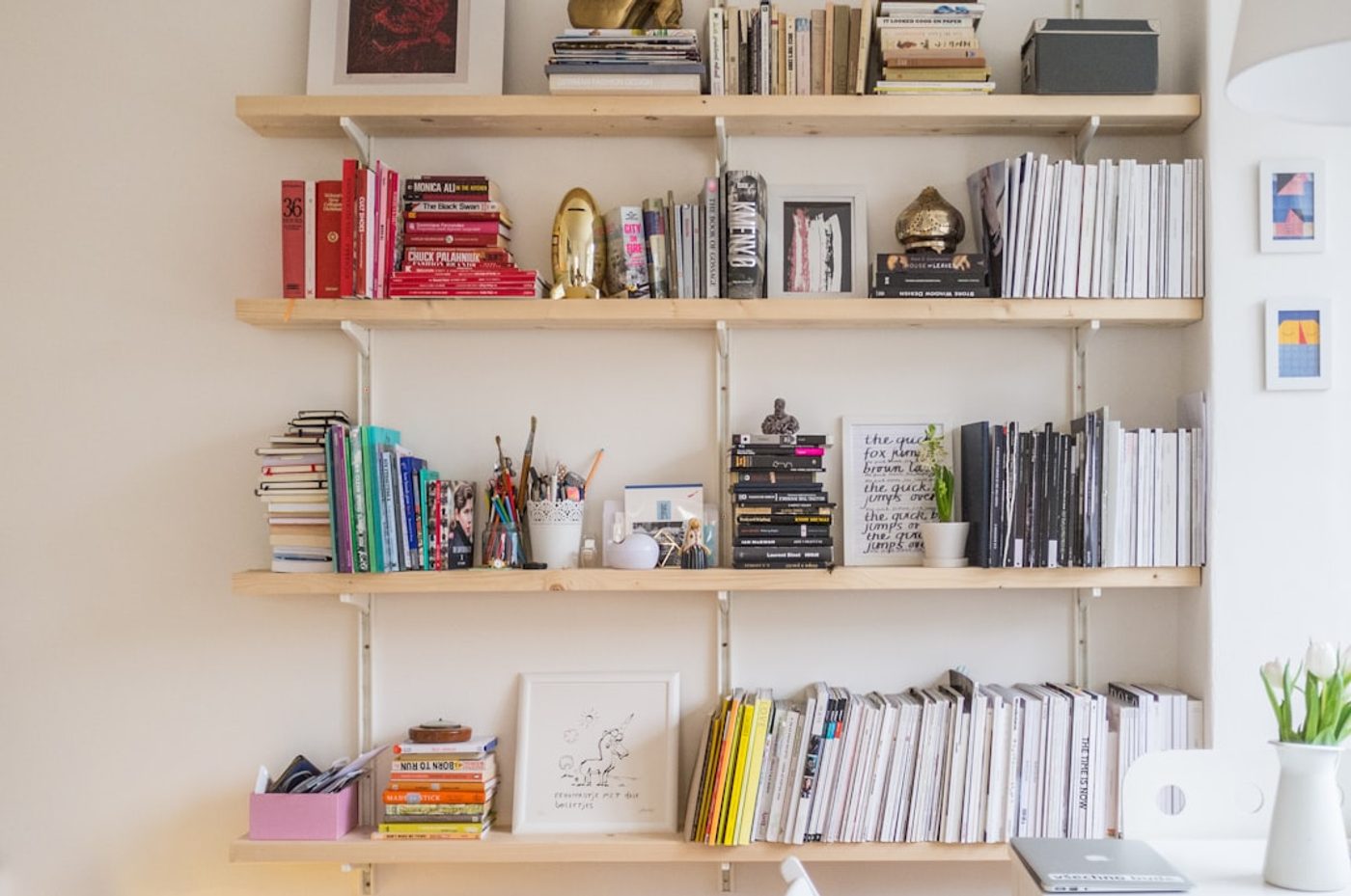
Vertical storage is often recommended for small office setups.
That's good advice when used carefully.
The goal isn't to cover every wall with shelves.
The goal is to move necessary items away from the main work surface.
When vertical storage becomes visual clutter, it starts creating the same problem it was meant to solve.
A Good Workspace Feels Effortless
The most successful compact workspaces have something in common.
They feel easy.
You sit down.
You start working.
Nothing needs to be rearranged.
Nothing demands attention.
The workspace quietly disappears into the background.
That's usually a sign that the design is working.
The Real Goal
A small workspace doesn't need to pretend it's large.
It doesn't need elaborate storage systems or oversized furniture.
It simply needs to support the work happening inside it.
The best compact workspace isn't the one that fits the most things.
It's the one that leaves enough room for work to happen comfortably.
Once you start protecting space instead of filling it, even a very small room can feel surprisingly spacious.
Related Reading
Continue Reading
FAQ
How can I make a small workspace feel bigger?
Reduce visual clutter, improve workspace layout, protect open desk space, and keep only essential items within reach.
What is the most important part of workspace planning?
Start by understanding your daily workflow before choosing furniture or storage solutions.
What makes a compact workspace feel crowded?
Too many competing objects, excessive storage, and poor layout decisions often make small workspaces feel smaller than they actually are.