Small Spaces
The Bigger Desk I Wanted Would Have Made My Room Worse
A bigger desk seems like the obvious solution when a workspace feels cramped. In reality, the wrong desk size can make a small room feel even smaller. Here's what I've learned about choosing a desk that fits both your work and your space.

Updated Jun 1, 2026
A few years ago, I became convinced that a larger desk would solve all of my workspace problems.
I wanted more room for my monitor.
More room for notebooks.
More room for all the things I thought productive people were supposed to have.
So I started looking at bigger desks.
55 inches.
60 inches.
Even larger.
At the time, it felt like the obvious upgrade.
Looking back, it would have been one of the worst decisions I could have made for that room.
The Room Was Never the Problem
The room wasn't large.
It wasn't tiny either.
Just a typical apartment bedroom with enough space for a bed, a wardrobe, and a small workspace near the window.
What bothered me wasn't the room itself.
It was the feeling that my desk always seemed crowded.
I blamed the desk.
Most people do.
When a workspace feels cramped, the first instinct is usually:
"I need a bigger desk."
But after looking at hundreds of desk setups over the years, I've noticed something interesting.
The most comfortable workspaces are rarely built around the largest desks.
They're built around the right proportions.
Why Bigger Desks Often Make Small Rooms Feel Smaller
This sounds obvious when someone says it out loud.
But most of us don't think about our desk as furniture.
We think about it as equipment.
A larger monitor feels like an upgrade.
A larger desk feels like an upgrade.
Until it arrives.
Then suddenly:
- The chair can't slide back properly.
- The room feels tighter.
- The bed feels closer.
- The walkway disappears.
The desk gained space.
The room lost it.
And that's a trade most people regret after living with it for a few weeks.
---
What Actually Changed My Workspace
The turning point wasn't buying a larger desk.
It was asking a different question.
Instead of:
"How can I fit more things on my desk?"
I started asking:
"Why are all these things here in the first place?"
That small shift changed everything.
The monitor went onto an arm.
The charger moved underneath the desk.
A stack of notebooks disappeared into a drawer.
The lamp became smaller.
Nothing dramatic happened.
But somehow the desk felt twice as usable.
Without gaining a single inch.
The Best Small Workspaces Don't Feel Full
One thing I've learned from studying well-designed workspaces is that the best setups leave space unused.
Not because the owner forgot to buy something.
Because empty space is useful.
It gives your eyes somewhere to rest.
It gives your hands room to work.
It makes the entire room feel calmer.
The goal isn't to fill every corner.
The goal is to create enough space to think.
The Desk Sizes I Keep Coming Back To
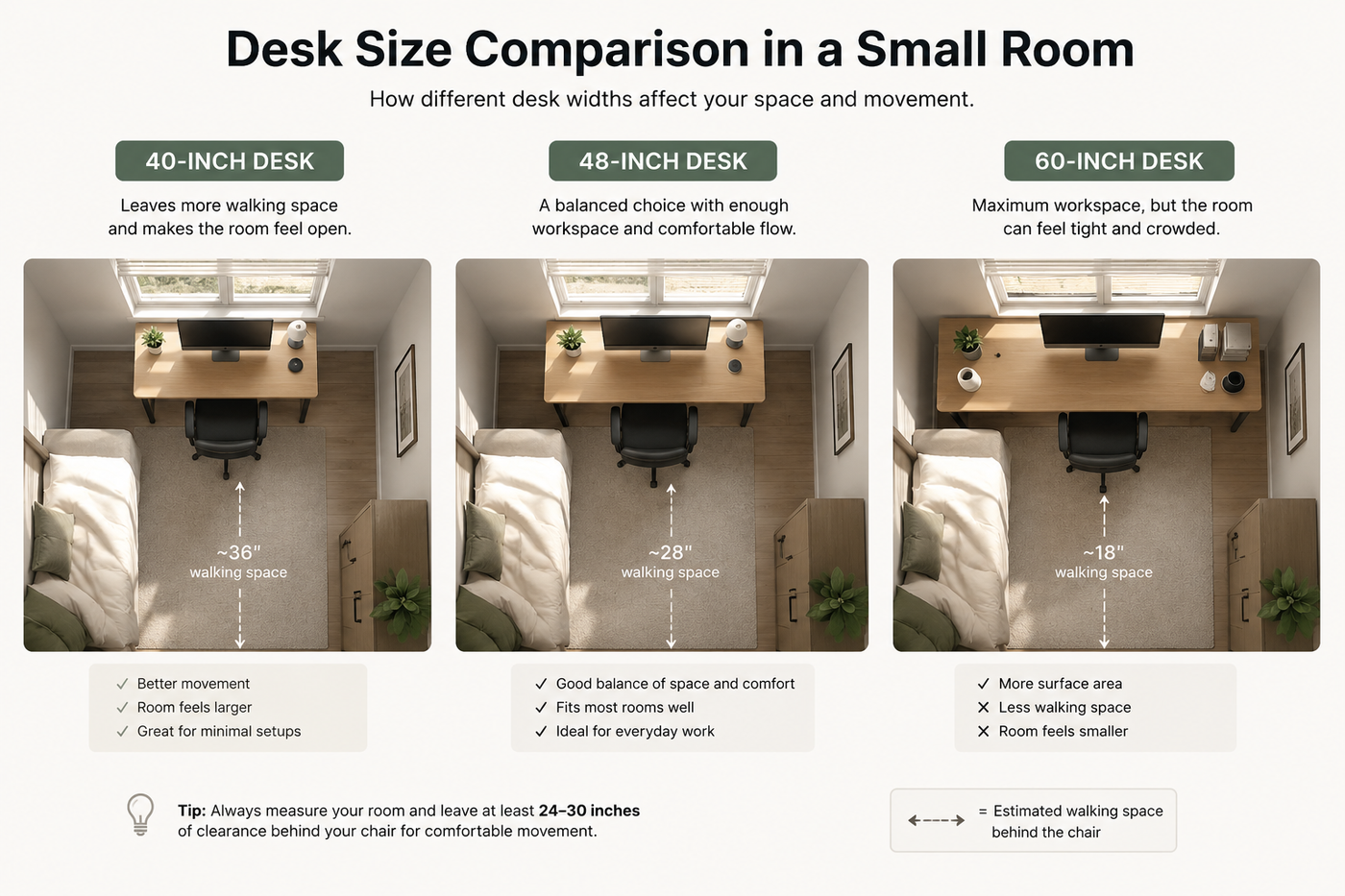
For most people working from a bedroom or apartment, I think these sizes make the most sense.
Around 40 Inches
Perfect for:
- Laptop users
- Students
- Tiny bedrooms
- Apartment corners
The limitation becomes an advantage.
You naturally keep only what matters.
Around 48 Inches
This is the sweet spot.
Large enough for:
- One monitor
- Keyboard
- Mouse
- Notebook
- Desk lamp
Without dominating the room.
If someone asked me for one recommendation without telling me anything else, this is probably where I'd start.
Around 60 Inches
Sometimes useful.
Often unnecessary.
The larger the desk becomes, the more important the room size becomes.
A desk should fit the room.
Not compete with it.
The Upgrade I Recommend Before Buying a Bigger Desk
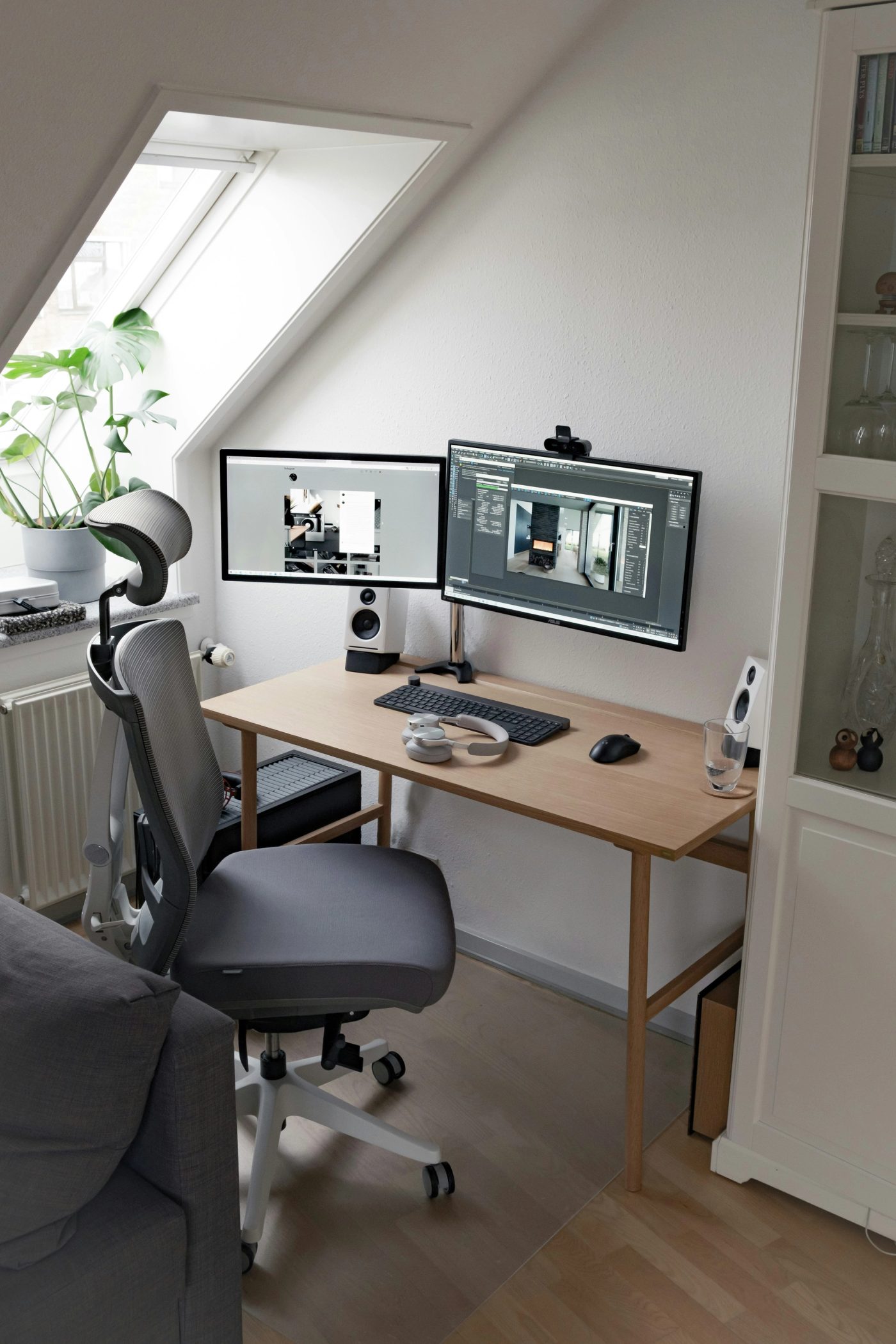
If your desk feels too small, don't immediately replace it.
Try this first.
Lift your monitor off the desk.
That's it.
A monitor arm is one of those rare upgrades that changes both how a workspace looks and how it feels.
Not because it's trendy.
Because it returns usable space.
The difference is surprisingly noticeable.
A notebook suddenly has somewhere to go.
Your keyboard feels less cramped.
The desk starts working with you instead of against you.
What I'd Buy Today
If I were building a workspace in a small room from scratch, I'd keep it simple.
A modest desk
Not the biggest one available.
The one that leaves enough room for the rest of your life.
A monitor arm
Probably the highest-impact upgrade for small spaces.
A compact desk lamp
Smaller than you think you need.
One storage solution
A drawer.
A shelf.
A cabinet.
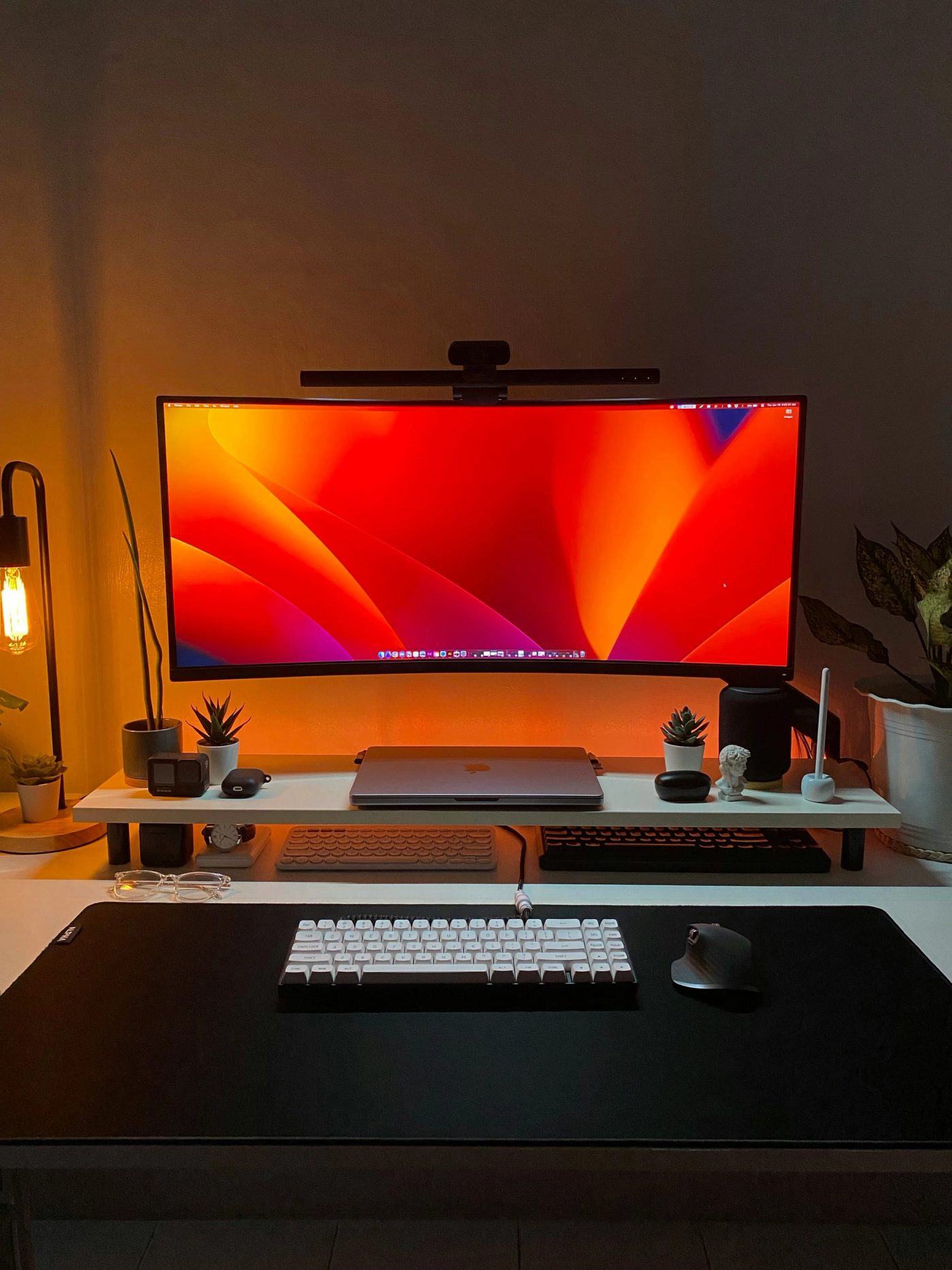
Anything that keeps the desk surface available for work.
Not storage.
The Real Lesson
For a long time, I thought a better workspace meant adding things.
A larger desk.
More accessories.
More equipment.
What actually improved the room was the opposite.
A little less furniture.
A little more breathing room.
A little more intention.
Most people buy a desk that's too big for their room because they're trying to create more space.
Ironically, the right desk often creates space by taking up less of it.
And that's a lesson I wish I had learned much earlier.
Related Reading
Continue Reading
FAQ
What desk size is best for a small room?
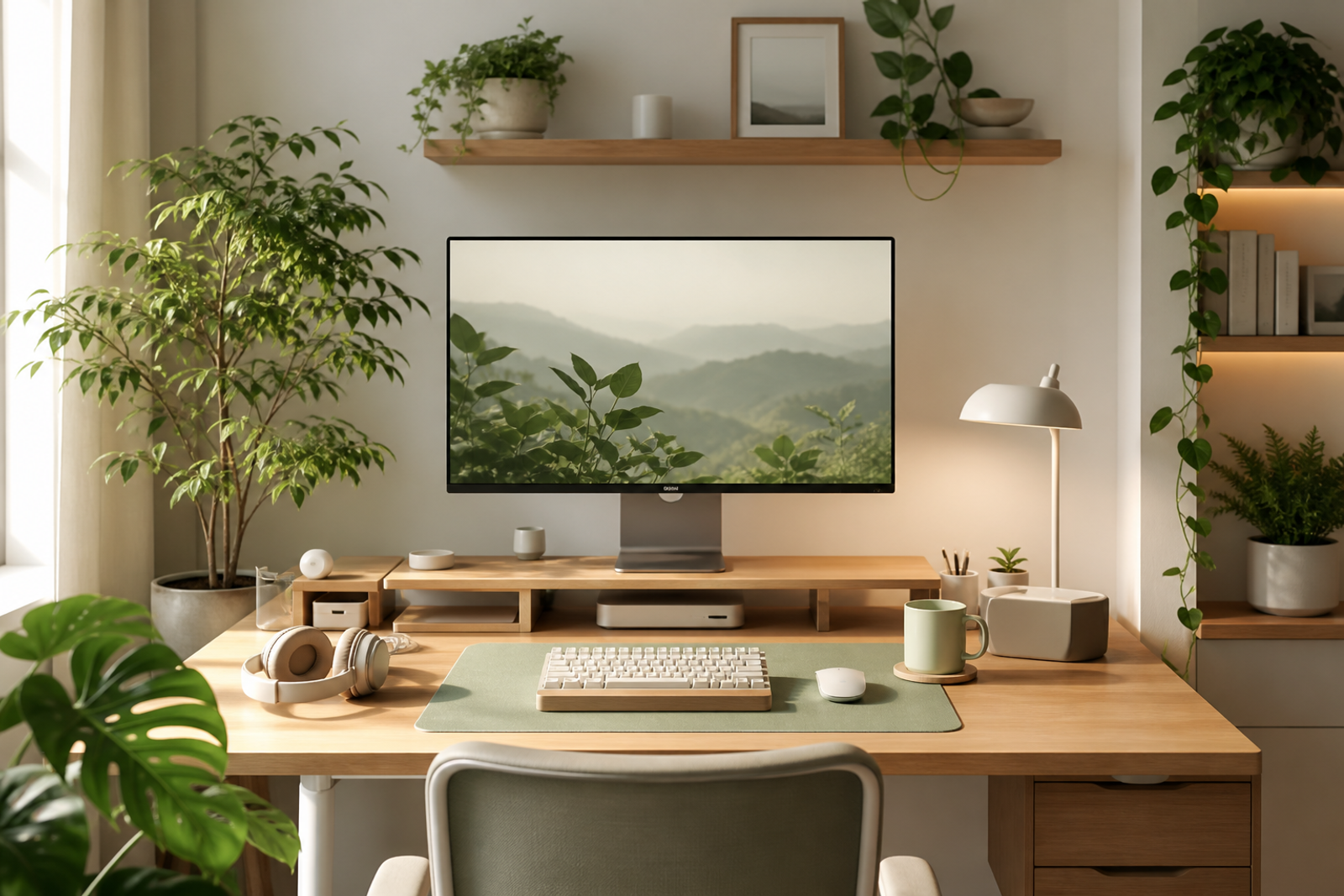
For most small bedrooms and apartments, a desk between 40 and 48 inches offers the best balance between workspace and room comfort.
Is a larger desk always better?
Not necessarily. A desk that is too large can make a room feel cramped and reduce usable living space.
Can a monitor arm make a small desk feel bigger?
Yes. A monitor arm frees up surface space and often provides a bigger improvement than upgrading to a larger desk.